Waste Reduction Toolkit

As healthcare costs continue to rise, it is essential to limit medication waste and workforce time waste whenever and wherever possible.1 We’re committed to helping.


Welcome to the Waste Reduction Toolkit, a dedicated resource designed to enhance cross-functional understanding of how controlled substance waste reduction can support operational efficiencies and cost savings within your institution.

In this toolkit, you’ll find support materials and data visualization tools focused on the significant benefits of adopting ready-to-administer (RTA) syringe systems. These resources allow you to review real-life impact data from other institutions or input your own data, offering clear insights into potential savings in medication waste, reduced diversion risk, and improved time management.

The toolkit is organized into two main sections:

  1. Support Materials: Download informational support materials in a PowerPoint format, tailored to facilitate discussions and showcase potential improvements.

  2. Analysis Tools: Assess the impact of switching to RTA syringes by reviewing data examples or entering Automated Dispensing System (ADS) data to visualize waste reduction benefits.

This toolkit will be instrumental in aligning key stakeholders, enabling them to evaluate institutional data and establish actionable steps to quantify and mitigate medication waste collaboratively. It supports informed decision-making and fosters collaboration across departments for a streamlined and more efficient healthcare environment.

If you have any questions along your journey, please contact us.

References: 1. Hertig JB, Degnan DD, Scott CR, Lenz JR, Li X, Anderson CM. A comparison of error rates between intravenous push methods: a prospective, multisite, observational study [published online ahead of print September 8, 2017]. J Patient Saf. doi:10.1097/PTS.0000000000000419.

Optimization

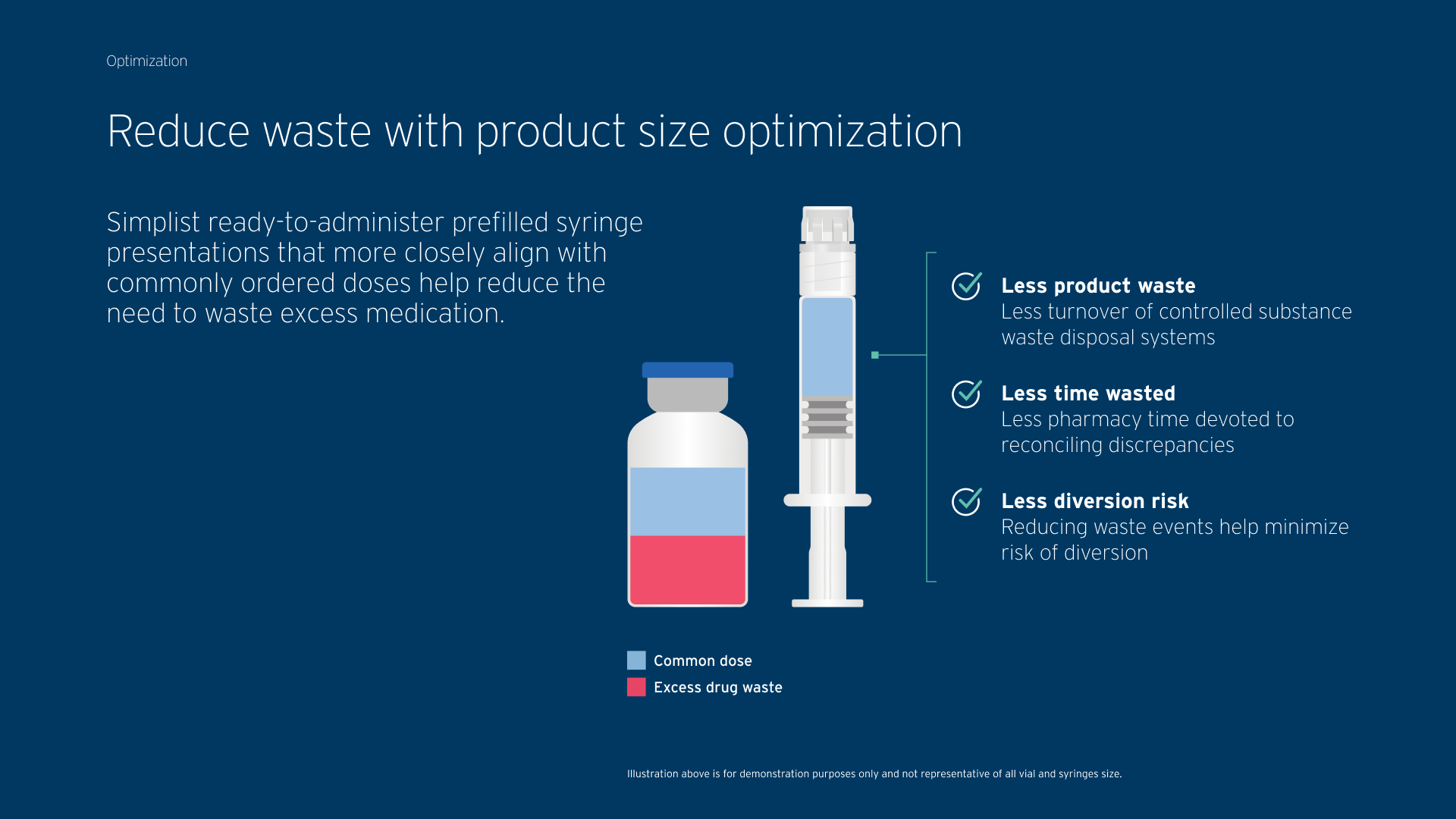
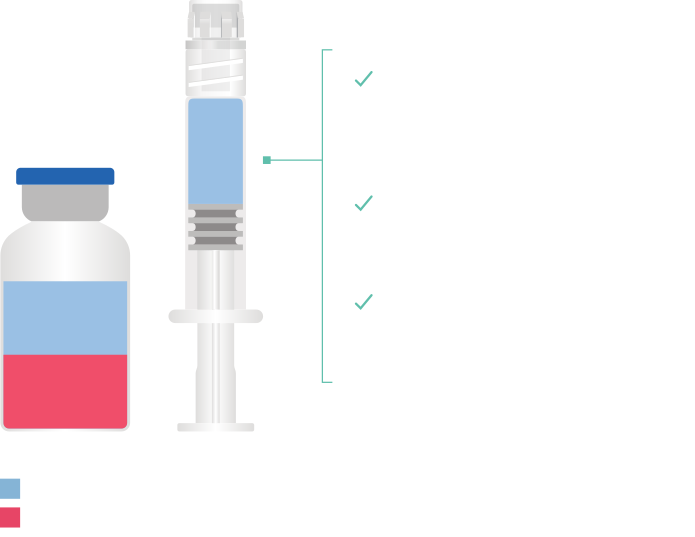
Reduce waste with product size optimization

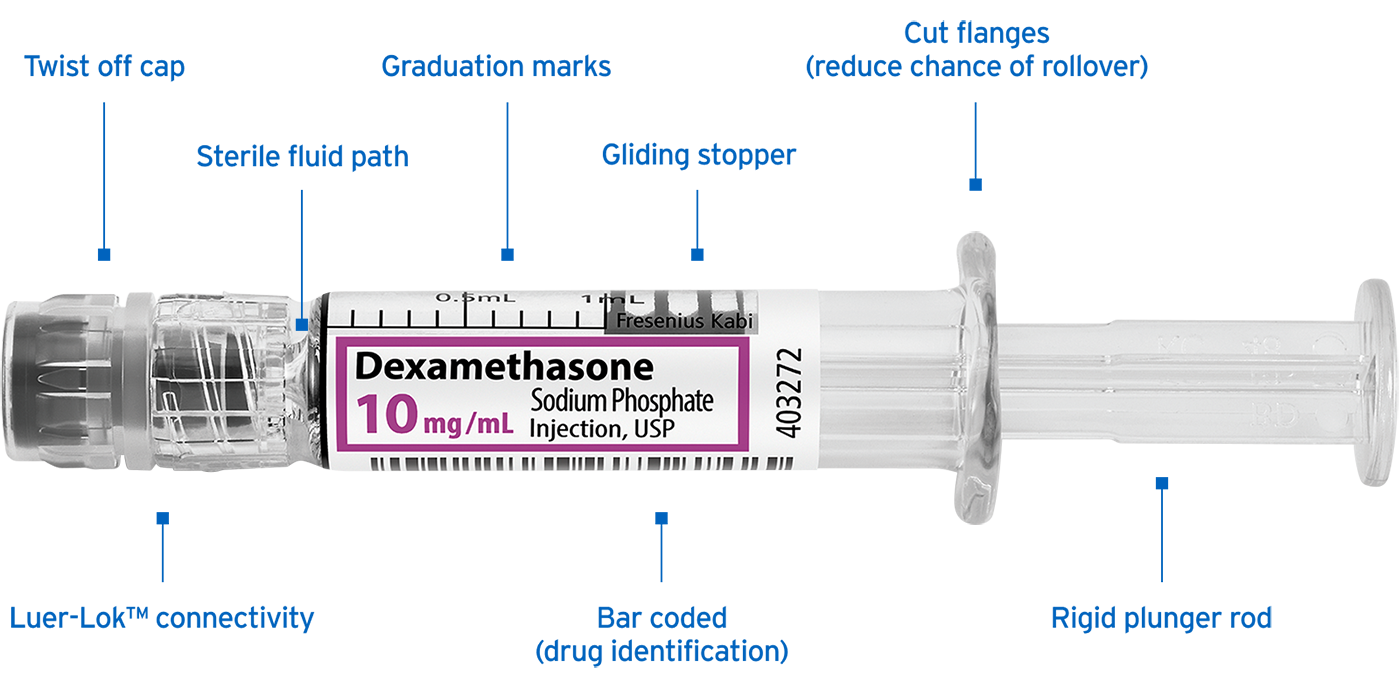
Simplist® ready-to-administer prefilled syringe presentations that more closely align with commonly ordered doses help reduce the need to waste excess medication.

Illustration above is for demonstration purposes only and not representative of all vial and syringes size.

Introduction to Simplist

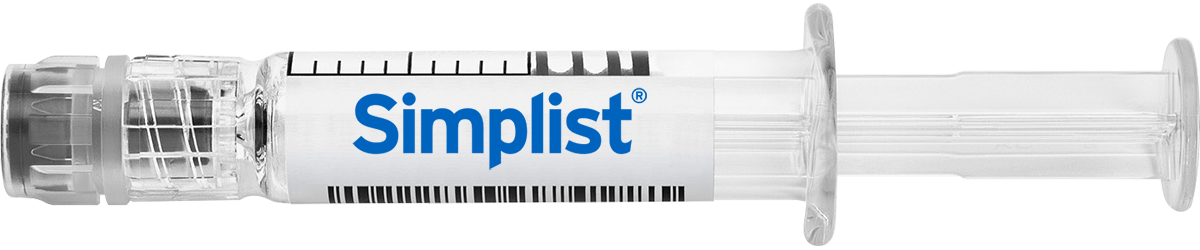
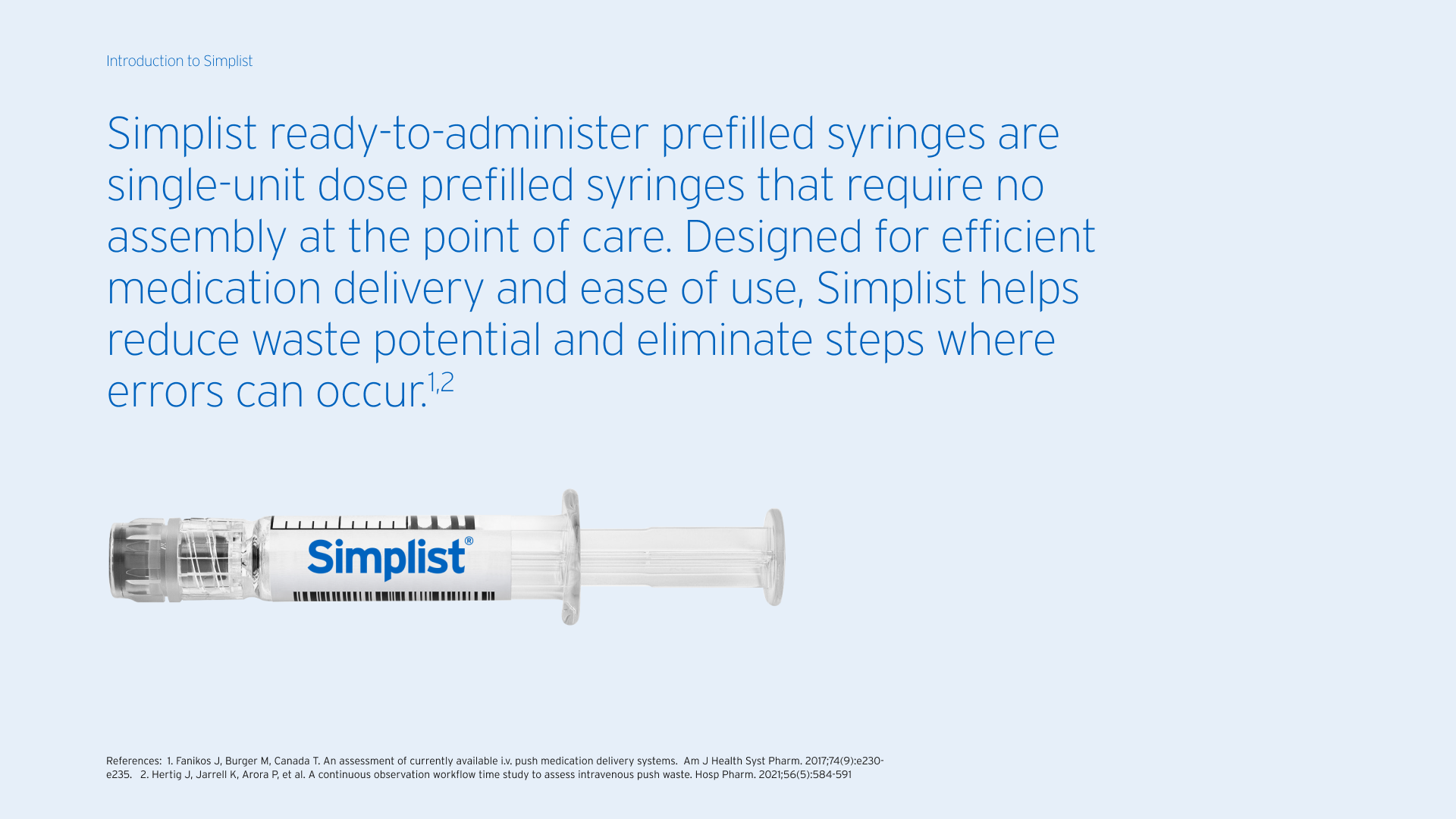
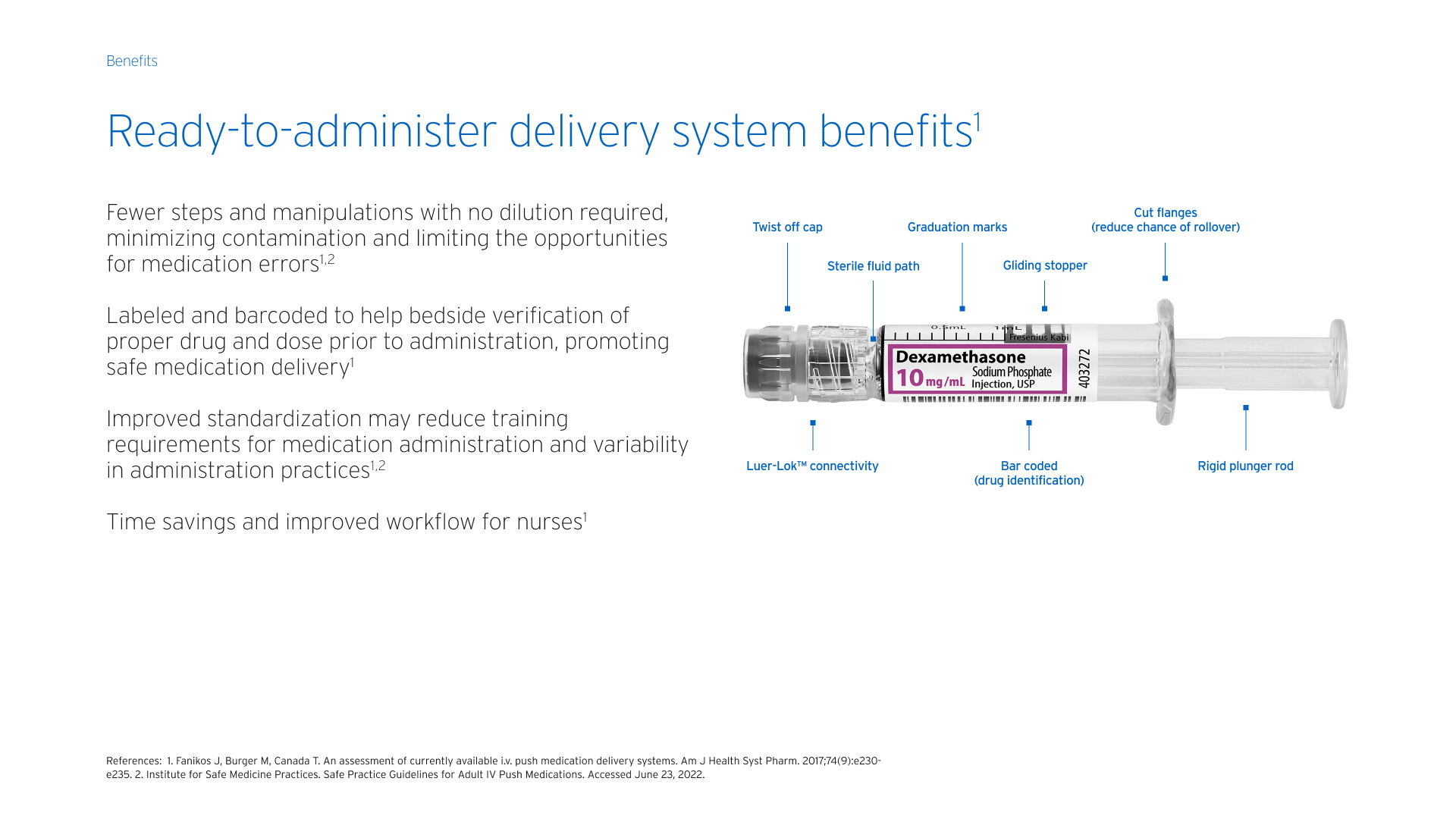
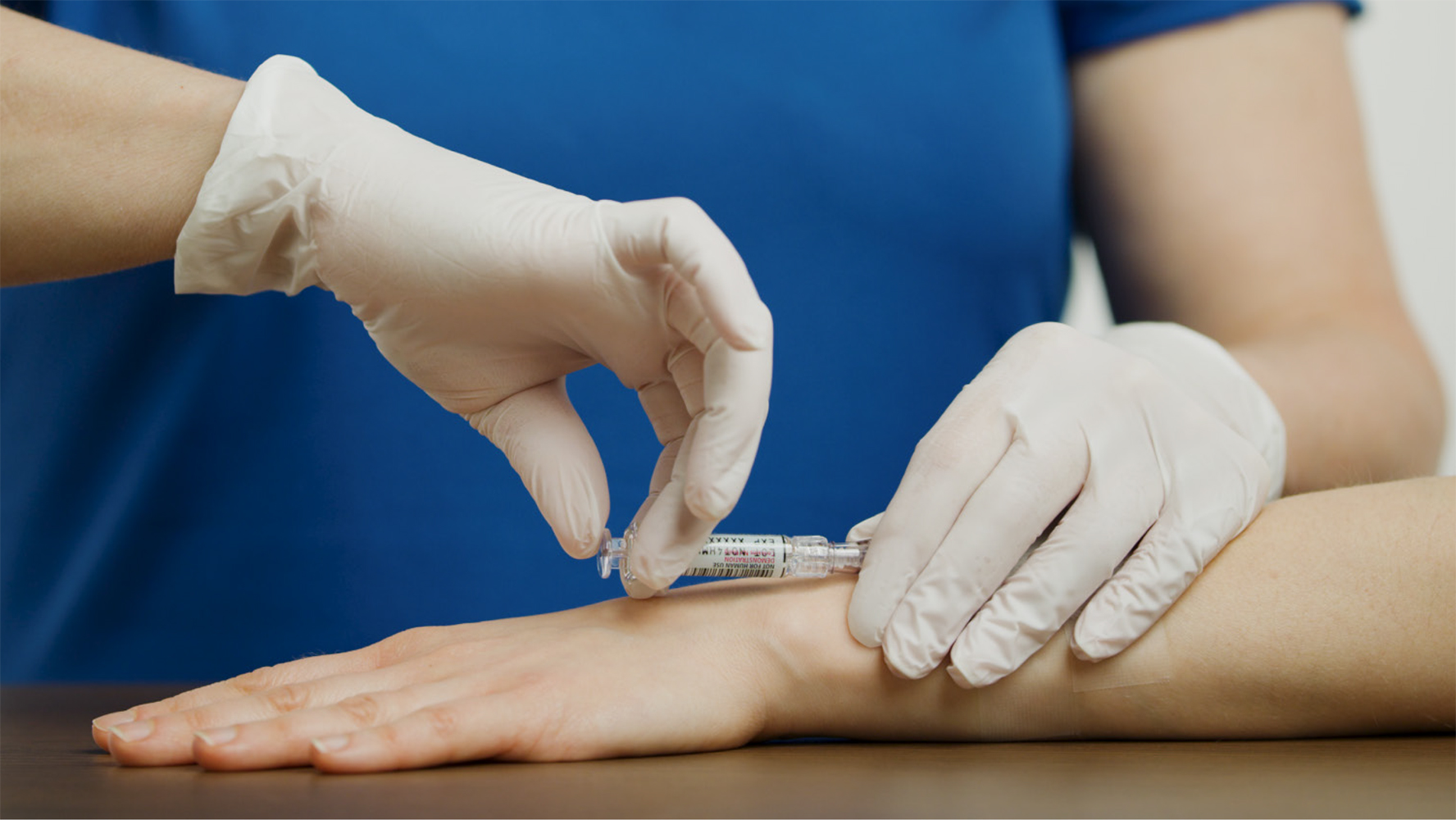
Simplist® ready-to-administer prefilled syringes are single-unit dose prefilled syringes that require no assembly at the point of care.

Designed for efficient medication delivery and ease of use, Simplist helps reduce waste potential and eliminate steps where errors can occur.1,2

References: 1. Fanikos J, Burger M, Canada T. An assessment of currently available i.v. push medication delivery systems. Am J Health Syst Pharm. 2017;74(9):e230-e235. 2. Hertig J, Jarrell K, Arora P, et al. A continuous observation workflow time study to assess intravenous push waste. Hosp Pharm. 2021;56(5):584-591

Benefits

Ready-to-administer delivery system benefits1

Fewer steps and manipulations with no dilution required, minimizing contamination and limiting the opportunities for medication errors1,2

Labeled and barcoded to help bedside verification of proper drug and dose prior to administration, promoting safe medication delivery1

Improved standardization may reduce training requirements for medication administration and variability in administration practices1,2

Time savings and improved workflow for nurses1

References: 1. Fanikos J, Burger M, Canada T. An assessment of currently available i.v. push medication delivery systems. Am J Health Syst Pharm. 2017;74(9):e230-e235. 2. Institute for Safe Medicine Practices. Safe Practice Guidelines for Adult IV Push Medications. Accessed June 23, 2022.

Primary Literature: A Comparison of Error Rates Between Intravenous Push Methods: A Prospective, Multisite, Observational Study

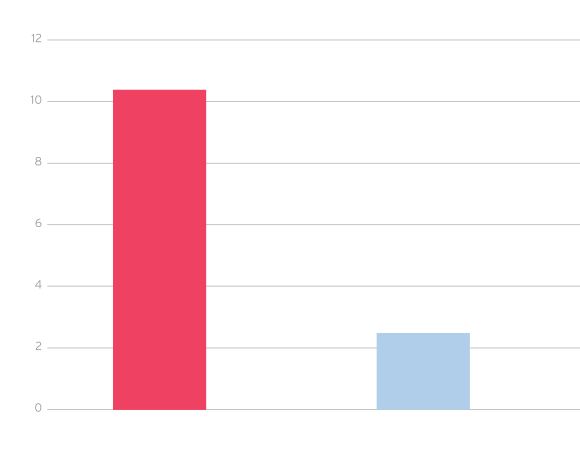
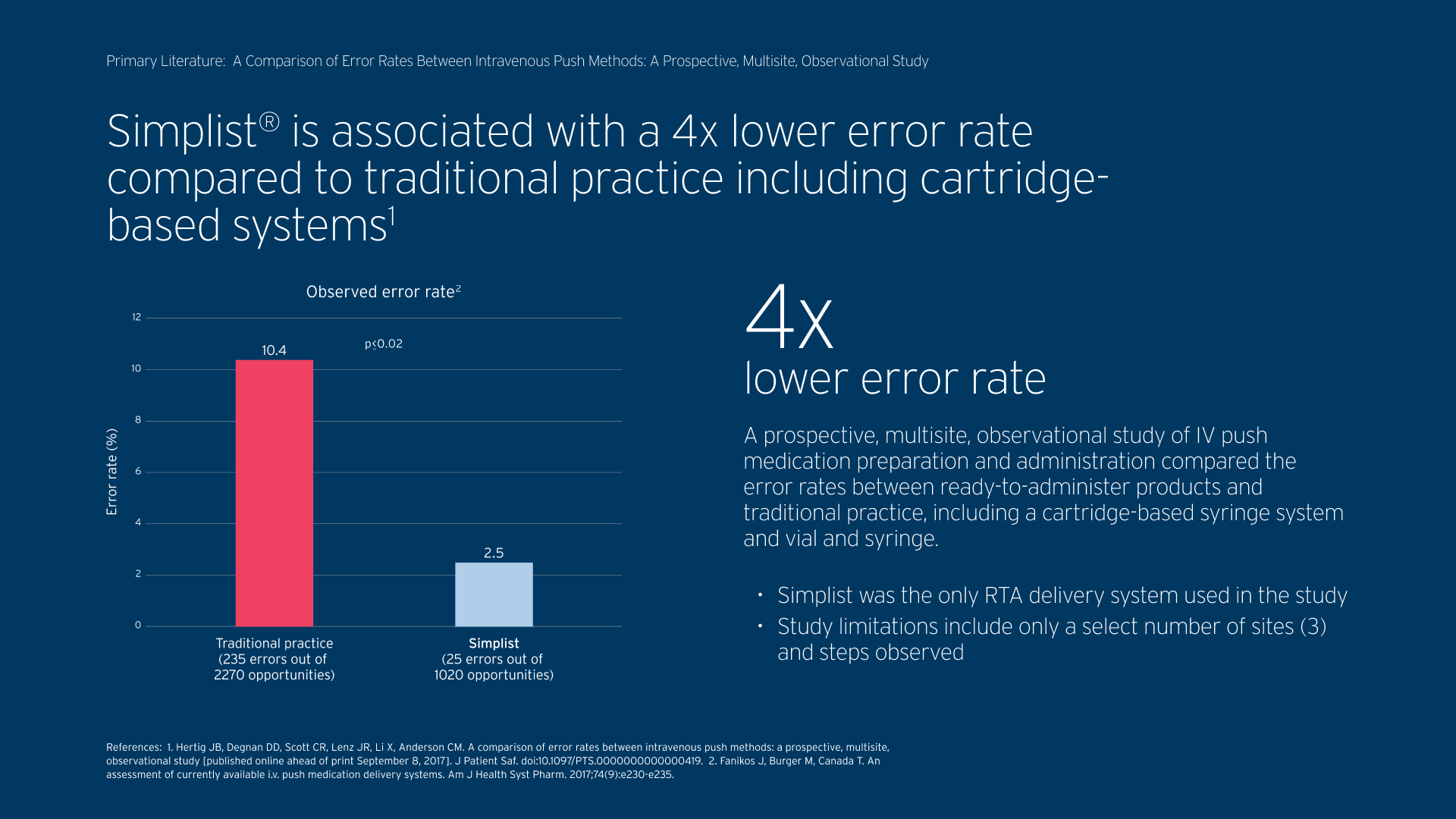
Simplist® is associated with a 4x lower error rate compared to traditional practice including cartridge-based systems1

4 times lower error rate with Simplist syringes

4x

lower error rate

A prospective, multisite, observational study of IV push medication preparation and administration compared the error rates between ready-to-administer products and traditional practice, including a cartridge-based syringe system and vial and syringe.

  • Simplist was the only RTA delivery system used in the study
  • Study limitations include only a select number of sites (3) and steps observed

References: 1. Hertig JB, Degnan DD, Scott CR, Lenz JR, Li X, Anderson CM. A comparison of error rates between intravenous push methods: a prospective, multisite, observational study [published online ahead of print September 8, 2017]. J Patient Saf. doi:10.1097/PTS.0000000000000419.

Primary Literature > A Continuous Observation Workflow Time Study to Assess Intravenous Push Waste

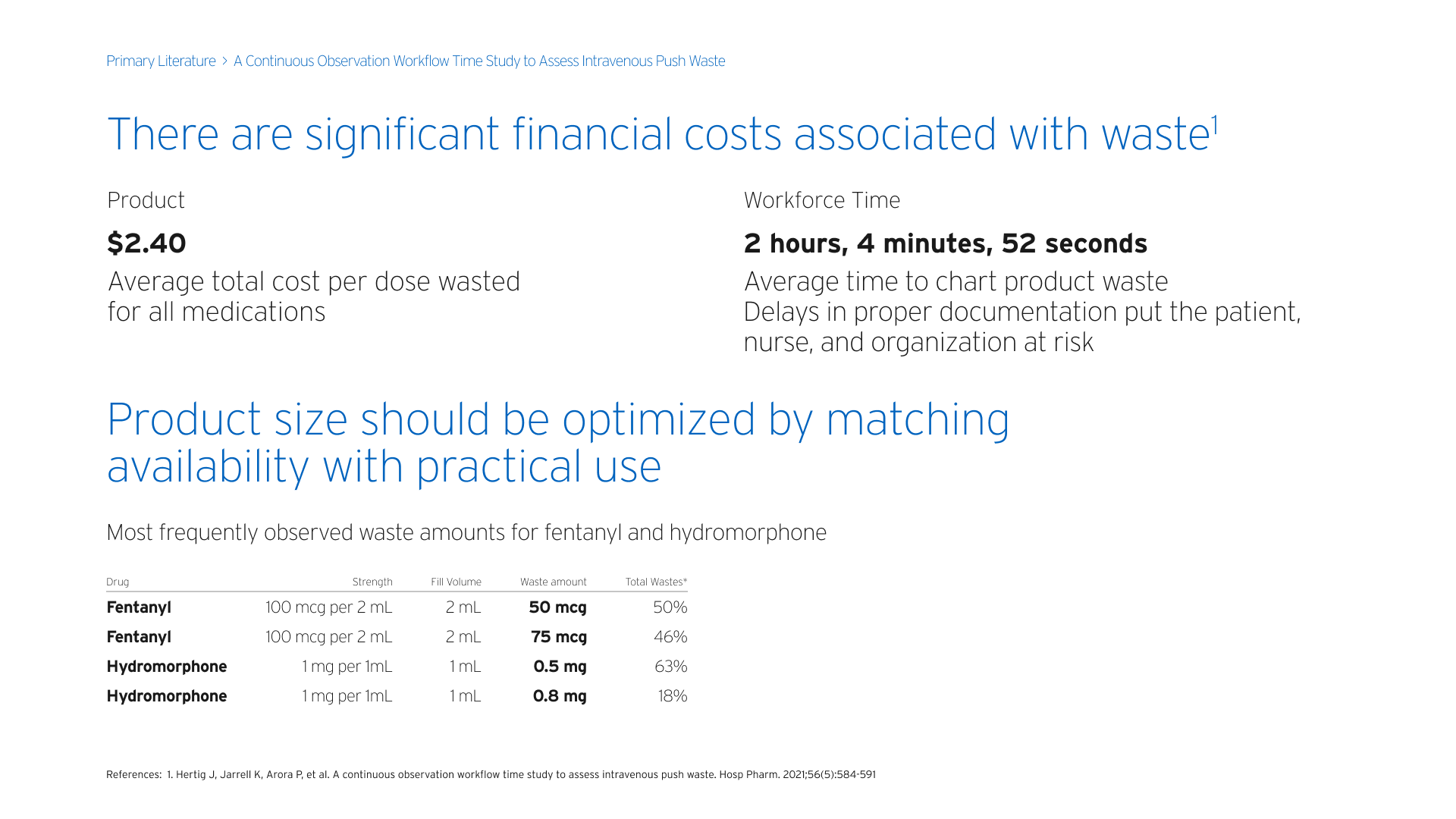
There are significant financial costs associated with waste

Product

$2.40

Average total cost per dose wasted for all medications

Workforce Time

2 hours, 4 minutes, 52 seconds

Average time to chart product waste

Delays in proper documentation put the patient, nurse, and organization at risk

Product size should be optimized by matching availability with practical use

Most frequently observed waste amounts for fentanyl and hydromorphone

Drug

Strength

Fill Volume

Waste Amount

Total Waste*

Fentanyl

100 mcg per 2 mL

2 mL

50 mcg

50%

Fentanyl

100 mcg per 2 mL

2 mL

75 mcg

46%

Hydromorphone

1 mg per 1 mL

1 mL

0.5 mcg

63%

Hydromorphone

1 mg per 1 mL

1 mL

0.8 mcg

18%

References: 1. Hertig, J., Jarrell, K., Arora, P., Nwabueze, J., Moureaud, C., Degnan, D. D., & Trujillo, T. (2020). A Continuous Observation Workflow Time Study to Assess Intravenous Push Waste. Hospital Pharmacy.
*Percentages are rounded to nearest whole number.

Primary Literature > A Cost-Effectiveness Study Comparing Ready-to-Administer and Traditional Vial-and-Syringe Method for Opioids

Simplist® is associated with a 94% reduction in errors compared with the traditional vial-and-syringe IV push method.

The analysis was conducted from a health system, focusing only on inpatient units, using a model designed from a time horizon of one year with a sample size of 15,727 administrations.

Simplist RTA prefilled syringes vs. Traditional vial-and-syringe

$182.61

Estimated savings per administration

$22,554

Incremental savings per additional error avoided

$2,871,889.27

Annual savings

References: 1. Arora, P., Muehrcke, M., & Hertig, J. (2022). A Cost-Effectiveness Study Comparing Ready-to-Administer and Traditional Vial-and-Syringe Method for Opioids.

Primary Literature > Intraoperative Opioid Waste and Association of Intraoperative Opioid Dose with Postoperative Adverse Outcomes: A Hospital Registry Study

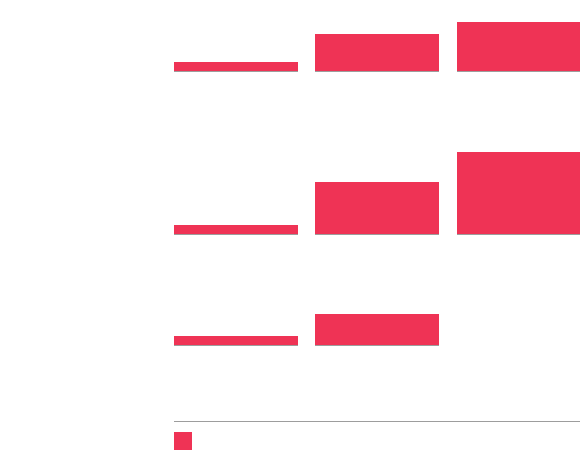
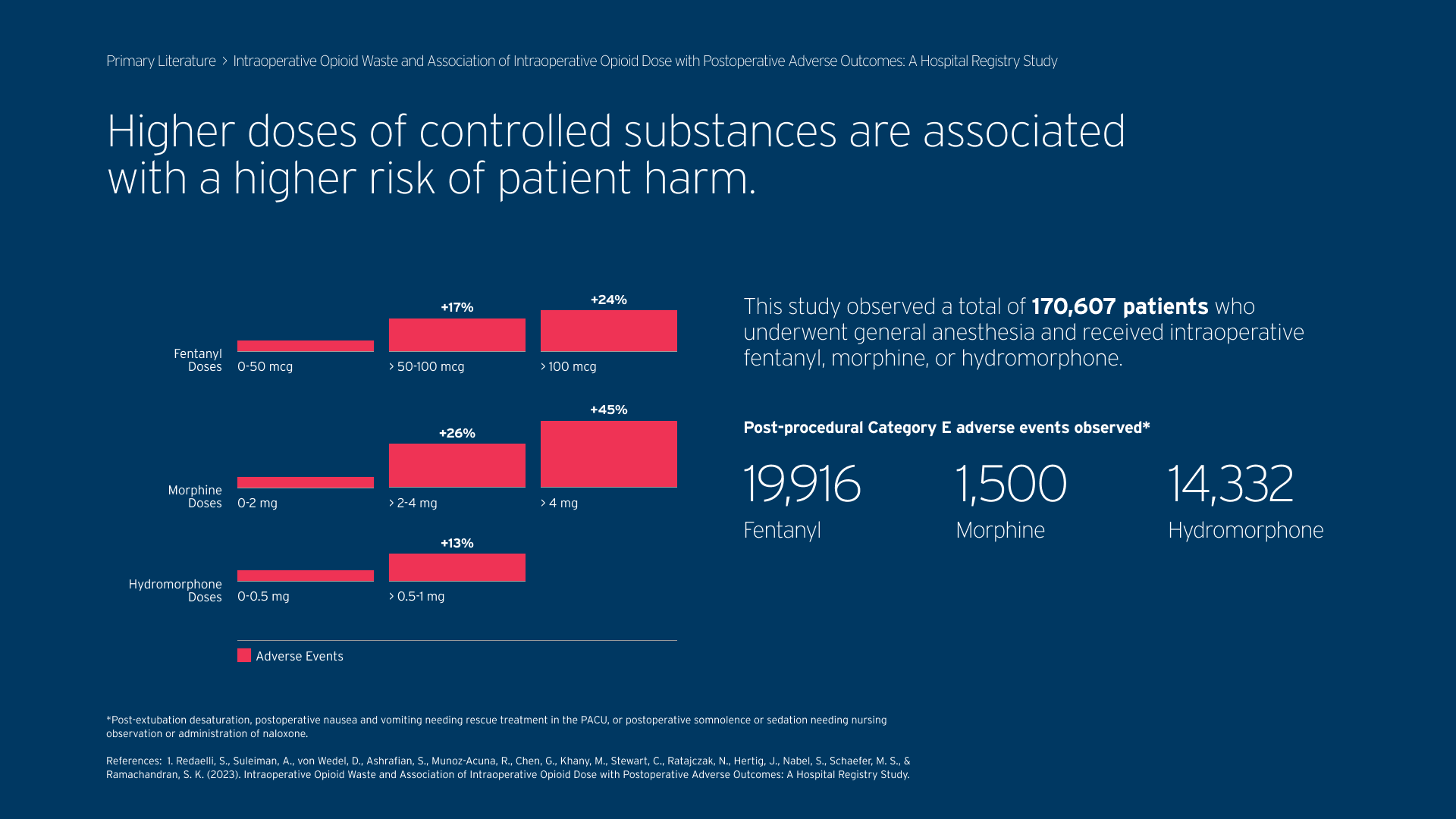
Higher doses of controlled substances are associated with a higher risk of patient harm.

This study observed a total of 170,607 patients who underwent general anesthesia and received intraoperative fentanyl, morphine, or hydromorphone.

Post-procedural Category E adverse events observed*

19,916

Fentanyl

1,500

Morhpine

14,332

Hydromorphone

*Post-extubation desaturation, postoperative nausea and vomiting needing rescue treatment in the PACU, or postoperative somnolence or sedation needing nursing observation or administration of naloxone.

References: 1. Redaelli, S., Suleiman, A., von Wedel, D., Ashrafian, S., Munoz-Acuna, R., Chen, G., Khany, M., Stewart, C., Ratajczak, N., Hertig, J., Nabel, S., Schaefer, M. S., & Ramachandran, S. K. (2023). Intraoperative Opioid Waste and Association of Intraoperative Opioid Dose with Postoperative Adverse Outcomes: A Hospital Registry Study.
Evaluation and Implementation Timeline

Example timeline for identifying institutional waste activities and implementing Simplist ready-to-administer syringes.

STEP 1

Waste analysis process

FK Pharmacy Analytics team reviews current waste analysis process

STEP 2

Waste reports process

Automated dispensing systems reports sent to FK Pharmacy Analytics team

STEP 3

Reports evaluation and action plan presentation

Pharmacy Analytics team presents overall review

STEP 4

Establish expected usage

To ensure available supply

STEP 5

Pain committee approval

Addition of fentanyl 50 mcg/ 1 mL and change to hydromorphone 0.2 mg from 0.25 mg

STEP 6

EHR ticket submitted to change default
Enterprise agreement

To change to hydromorphone 0.2 mg default Fentanyl 50 mcg / 1 ml added to radiology & anesthesia carts

STEP 7

Fentanyl expanded

To nursing units, ED, and Cath lab

P&T approved

Hydromorphone 0.2 mg Injection as default dose change and Hydromorphone 0.2 mg Injection addition

STEP 8

Cabinets refreshed

Hydromorphone 0.2 mg Injection and Fentanyl 50 mcg/mL stocked
Fentanyl 100 mcg / 2 mL unloaded from Critical Care area Pyxis

STEP 9

Opportunities for improvement

Review of Post go-live reports

* All evaluations and implementation plans are different.

Waste Analysis Data Visualization

Potential Impact

This tool is designed to show the potential impact changing to RTA Syringes can have within an institution.

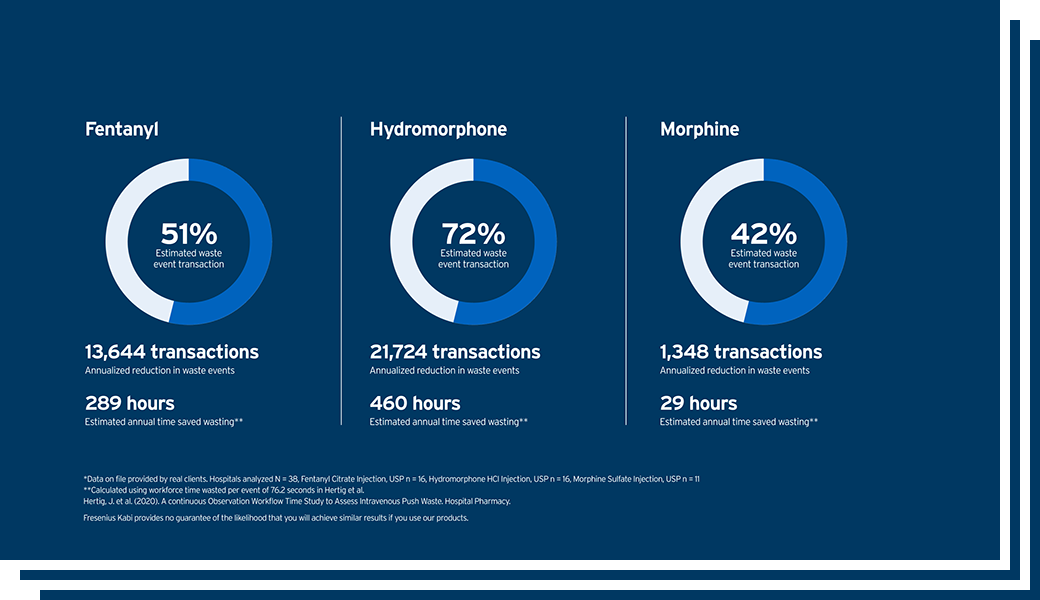
Fresenius Kabi has help identify the necessary waste data from customers’ automated dispensing systems and helped calculate how much narcotic waste is costing institutions. Below is a summary of average potential reduction in waste events by hospital sizes.*

Select your preferred Hospital size to be included in your Toolkit Download:

Fentanyl

51%

Estimated waste
event transaction

13,644 transactions

Annualized reduction in waste events

289 hours

Estimated annual time saved wasting**

Hydromorphone

72%

Estimated waste
event transaction

21,724 transactions

Annualized reduction in waste events

460 hours

Estimated annual time saved wasting**

Morphine

43%

Estimated waste
event transaction

1,348 transactions

Annualized reduction in waste events

29 hours

Estimated annual time saved wasting**

*Data on file provided by real clients. Hospitals analyzed N = 38, Fentanyl Citrate Injection, USP n = 16, Hydromorphone HCl Injection, USP n = 16, Morphine Sulfate Injection, USP n = 11
**Calculated using workforce time wasted per event of 76.2 seconds in Hertig et al.
Hertig, J. et al. (2020). A continuous Observation Workflow Time Study to Assess Intravenous Push Waste. Hospital Pharmacy.
Fresenius Kabi provides no guarantee of the likelihood that you will achieve similar results if you use our products.

Support Materials Download

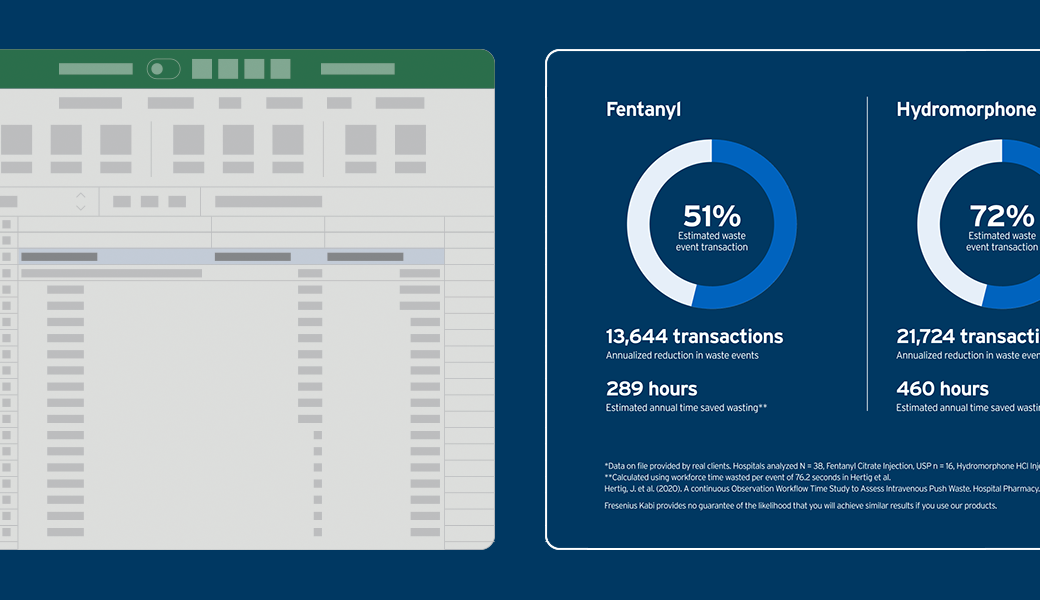
Download your Toolkit as a powerpoint presentation with aggregated and anonymized customer data you selected above.

Customize your PowerPoint presentation by adding your institution's data into our waste reduction form.

Customize data

Narcotic waste reduction with Simplist® ready-to-administer prefilled syringes

Created for Institution Name

By Firstname Lastname

Fresenius Kabi USA, LLC © 2024. Simplist® is a registered trademark of Fresenius Kabi USA, LLC.

Potential Impact at Institution Name

Fentanyl

51%

Estimated waste
event transaction

13,644 transactions

Annualized reduction in waste events

289 hours

Estimated annual time saved wasting**

Hydromorphone

72%

Estimated waste
event transaction

21,724 transactions

Annualized reduction in waste events

460 hours

Estimated annual time saved wasting**

Morphine

43%

Estimated waste
event transaction

1,348 transactions

Annualized reduction in waste events

29 hours

Estimated annual time saved wasting**

*Calculated using workforce time wasted per event of 76.2 seconds in Hertig et al.
Hertig, J. et al. (2020). A continuous Observation Workflow Time Study to Assess Intravenous Push Waste. Hospital Pharmacy.

Please rotate your tablet

We support landscape mode only

Sorry, we can't fit everything on your screen.

Please use a tablet or larger screen monitor.